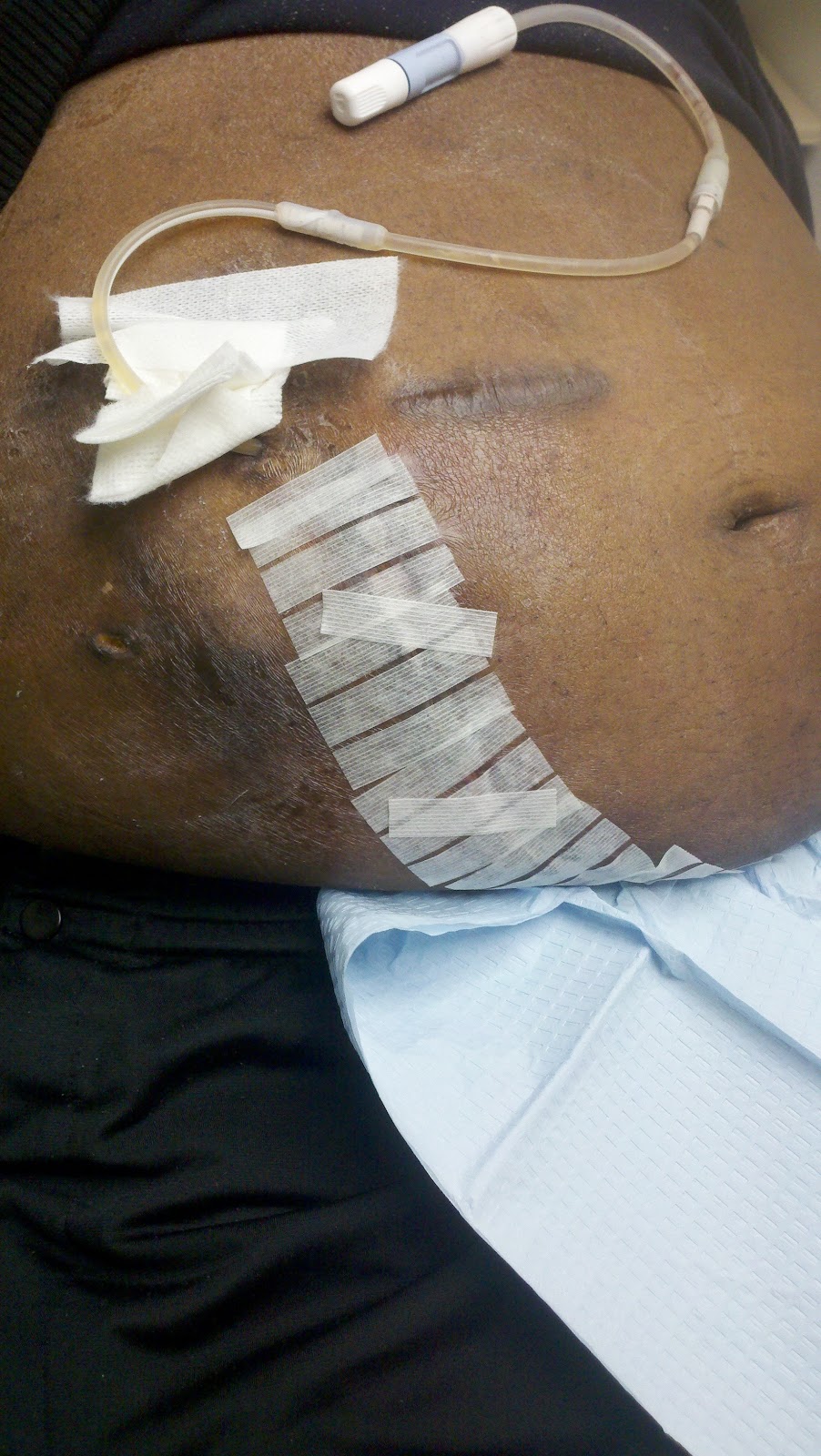
Saturday, March 9, 2013

Mr. Smith – uh, McFarlin – Goes to Washing – er, Springfield...Maybe

Now that World Kidney Month is officially in high gear, I'm thinking it could be the most appropriate time to share my big news: I have been appointed (hear the drum roll in your head) patient advocate board member of the ESRD (End-Stage Renal Disease) Advisory Committee for the State of Illinois!

The whole freakin' state! Chicago included!

I would like to thank the academy, the committee, my parents – I know you're looking down on me, Mom and Dad – my incredible wife, Karen; my family, and all the other little people like me who are affected by some form of kidney disease yet strive to maintain healthy, productive, positive lives!

I serve for you! I will be proud to represent your interests at the state capitol! On to Springfield, and victory!

OK, that's quite enough of that. The truth is, I have no idea what all this means.

Back in November I received an email from a pleasant woman at the Illinois Department of Public Health. Apparently all of this – the Just Kidneying blog, the appearances on behalf of the National Kidney Foundation of Illinois, the work with my NKFI chapter in Champaign-Urbana – placed me on the radar of some kidney koordinators at the state capitol. (The fact that my name was misspelled in the email suggested I hadn't become the talk of Springfield just yet.)

She wrote to gauge my interest in serving a three-year term on the ESRD board and sent along an application form to fill out, just to make sure I'm not a convicted criminal, a Republican or some other undesirable in Illinois. After I was vetted and approved a few weeks later, I received another email from another pleasant female bureaucrat with a note of congratulations and a downloadable, 40-page booklet entitled, "2013 ETHICS TRAINING for Appointees to State of Illinois Boards." It is required reading for everyone appointed to a state board, the email instructed, and I was to sign and return the last page verifying I had done so.

As I studied the document detailing what would be considered prohibited activities or conflicts of interest, and knowing my adopted state's "colorful" political history, I couldn't stop thinking, "Wonder if Rod Blagojevich and George Ryan ever signed off on one of these? Or read one, for that matter?"

But I'm now signed, sealed and delivered to the ESRD Advisory Committee, and rarin' to go. One of the major issues I want to address with the board, one we talk about often at my Champaign NKFI chapter, is access to care.

Where I live now, out on the high prairie, a lot of people with kidney failure live in rural areas and dialysis centers are in larger cities. Many live outside the range of bus service, and the sheer cost of gas for friends or relatives to drive them to dialysis and back (which is essential, because hemodialysis often leaves patients too weak to drive home on their own) can be prohibitive. There has to be a way to ensure everybody who needs dialysis can receive it despite $4 a gallon at the pump.

Only thing is, I'm rarin' to go but have no set destination. The committee has yet to call its first meeting of 2013, and there's no indication one is being scheduled for the immediate future.

So at the moment, I have a very impressive and important-sounding title with not the faintest clue of what I can accomplish with it. Does that make me like an ambassador?

Or better yet these days, like a member of Congress?

Saturday, February 23, 2013

Kidneys On Patrol

March, as every man, woman and child in America knows, is National Kidney Month.

The renal version of Mardi Gras, the Super Bowl and Independence Day, all rolled into a giant kidney-shaped ball.

Whoopee!

For some reason, I'm even more excited about this year's festival of function – highlighted by World Kidney Day Thursday, March 14 – than usual. So I'm getting an early jump on things. Maybe it's because I feel I've become more immersed in the kidney community in Illinois, the state where I live, than ever.

And one of the coolest things about NKFI, the National Kidney Foundation of Illinois, is its funding and perpetuation of the KidneyMobile, a fully equipped van that circles the state providing information about kidney disease and free screenings of blood sugar, blood pressure and urinalysis. People who get tested also have the opportunity to meet with a healthcare professional to review their results and discuss next steps.

And believe you me, when it comes to your kidneys, knowledge truly is power!

Here's a closer look at the KidneyMobile, thanks to this new NKFI video:


If you're in the Chicago area, I'll be joining in the World Kidney Day celebration on Thursday, March 14 at the Ray and Joan Kroc Community Center, 1250 West 119th Street. The event begins with a press conference at 10 a.m. at which Illinois Secretary of State Jesse White and several other Windy City bigwigs will speak, followed at 10:30 by five hours of free screenings for anybody willing to sit down and get tested. 

It's a big day for kidneys all over the earth!

For more information on World Kidney Day, check out this web page from the National Kidney Foundation. For more information on the Chicago festivities, call NKFI at (312) 321-1500.

Happy Peeing, Everyone!

Monday, January 14, 2013

Goodbye, My Kidney Cousin

My dear friend Karen Dumas was the first to let me know. She and I had just shared breakfast that Friday morning, lamenting the post-New Year winter doldrums of January and the difficulty of getting your emotions jump-started and your life's goals in proper focus. So she must have known how I'd respond to the news.

She sent a text message that afternoon. Four words were all that was needed.
Gift of Life Organization

"Hugh Grannum has passed."

They hit me like four sledgehammer blows to the chest.

Hugh Parker Grannum, you see, besides being an award-winning, legendary, trailblazing photojournalist at the Detroit Free Press for more than 37 years prior to his retirement in 2007, felt to me like my kindred spirit because we shared an intimate connection:

We both contracted kidney failure at about the same time, and were on waiting lists for a transplant simultaneously, albeit in different states.

Hugh, 72, was at the Free Press long before I started writing for the rival Detroit News, and he remained there long after I left. We weren't exactly what you'd call bosom buddies during those years, but we knew of each other and were cordial whenever our paths would cross. (Bitter competition between the two daily papers in those days often hampered close friendships.)

But oh, how I admired his work! Hugh's photos consistently captured the essence of humanity, grace and quiet strength. As noted in his obituary, which you can read here, he was extremely mindful to shoot his subjects with dignity, especially African Americans, knowing it may be the only time in their lives they were photographed by a professional. I have worked with a number of very fine photographers over my career, but I always wished Hugh could have embellished one of my stories with his singular magic.

Hugh Grannum just radiated cool. The late, fabled Detroit Mayor Coleman Young, who generally despised anybody who even appeared to have a media connection, maintained an open-door policy with Hugh. Nattily dressed, thoroughly professional, devoted to his art, he was every inch a role model, and after his kidneys began heading south our mutual admiration deepened.

Because of the close timing of our end-stage renal diagnoses and the fact we were both creative black men who worked for Detroit newspapers, our illnesses became closely intertwined. We often were mentioned in the same sentence; the great Freep columnist Rochelle Riley wrote about our mutual transplant needs. I recall one "friendraiser" benefit in Detroit that was held on behalf of us both. Mutual friends would keep me aware of his condition, and I'm certain they did the same with Hugh.


He received his transplant first, in 2010. I sent him a congratulatory card and effusive online best wishes. When I got my Cheyenne in November 2011, I received the same in return. We began speaking on the phone semi-regularly, just checking in and offering encouragement. Then last winter, we finally coordinated my travel plans and his hectic post-retirement schedule in order to meet for dinner.

Hugh, his delightful wife Carolyn and I met at Slows, Detroit's hottest barbeque joint, on a snowy, windy night. He was wearing a jaunty winter cap (oh, he could wear some hats) and his stylish little round glasses. We talked and laughed for hours, comparing transplant waiting list stories, hospital tales, surgery sagas and medication inventories. It was a magical, cosmic kind of evening. It's not because he's gone now that I'm saying this, but it was a night I will never forget.

There was a lot more wrong with Hugh than kidney miseries. He was afflicted with leukemia and, like me, still waged a constant battle against hypertension. Yet he seemed so upbeat, so happy, so...healthy that night, so positive in looking forward to his future with Carolyn and his lovely daughter, Blake.

A lot of people say, "I can't believe he's gone," when someone close to them dies, but in this case I mean it. In a very real sense, losing Hugh is like losing a part of my body, a slice of my history. Admittedly, it's a stunning, slap-in-the-face reminder of my own fragility and mortality. Hugh was literally my brother under the skin, and we both had the scars to prove it.

I can't imagine ever forgetting you, my friend. Hugh Grannum and I will be forever joined at the renal artery. Godspeed to you, man, and deepest sympathies to your family and your many, many friends who will remember you long and fondly.

Again, for more about Hugh, here is the obituary from his newspaper home, the Detroit Free Press.

Tuesday, January 1, 2013

New Year, New Life

It's been all the talk around where I live. Or maybe because people know about my medical situation, they've been racing up to tell me about it.

Shortly before Christmas, a man strolled into a suburban Chicago hospital and announced that he wanted to donate one of his kidneys. Not to anyone in particular, he explained; he just felt compelled to give a special Christmas "gift of life" to somebody.

After running the customary battery of tests (physical, not psychological), it was determined that his kidneys were a match for a 60-year-old wife, mother and grandmother from Burbank, Ill., who had been on dialysis for six years while waiting for a transplant donor.

Six years.

Six years of energy- and body-sapping dialysis, every week after exhausting week. Six years of waiting for a matching organ, hoping for the phone to ring with "the call," praying for deliverance. A six-year sentence, six years of a life not being fully lived.

What an indescribably amazing present.

Now, I'm not suggesting that you run out and do the same (Lord knows I can't), but you may be surprised to know that this type of altruism is not as unusual as you might think. According to UNOS (the United Network for Organ Sharing), more than 6,000 living, breathing people donate an organ for transplantation every year, and one out of four of them have no biological connection to the recipient.

Still, to just walk into a hospital and volunteer to give up a part of your body....

The woman in Burbank referred to her donor as "my angel," and she's probably not far from wrong. What a phenomenal way for her – for both of them, actually – to ring in the New Year!

So let me end this meditation the way I end many of my speaking engagements: Please consider organ donation. Just consider it. As of this writing more than 74,000 people are on the active national waiting list for an organ transplant, and hundreds die every year still waiting.

Make the notation on your driver's license. Let your family and friends know of your intentions. Once you're gone, you won't need them. Honest. Trust me. The Walking Dead is just a TV series. It's not real.

And as for donating an organ while you're still living, hey – as gifts go, it beats the heck out of a Kindle.

Wednesday, November 21, 2012

Happy Birthday, Cheyenne! (and Me)

Surely some scalawag must be playing tricks with my calendar. It cannot possibly be one entire year since I was flat on my back in a hospital room at Barnes-Jewish Hospital in St. Louis, feeling like I had been sliced open from hip to hip (because I had) and giving thanks every moment for the numbing release of a morphine drip.

"If this is what a kidney transplant feels like," I remember thinking, "maybe dialysis wasn't so bad after all."

That, of course, was the drugs woofing. Cheyenne, the little kidney that can, has officially been inside me and functioning flawlessly for 12 months now, and we couldn't be happier together.

What's the symbol for a one-year anniversary? Paper? That's so passé. Let me write words on this computer screen instead to celebrate this mini-milestone and praise the miracles of modern medicine. 

Happy Birthday, Cheyenne! And by extension, because a transplant literally is the gift of a second chance at life, Happy, Happy 1st Birthday to me as well.

The months of wound care and recuperation, the constant doctor's visits, the adjustment to taking and coordinating an avalanche of new prescription drugs – it all feels like a hazy memory now, as if I was observing somebody else's life from afar. Everything has settled into a natural, comfortable daily routine (although I still can't remember how long to wait after taking my anti-rejection pills to eat; I really like eating).

The moral of Year One for me is that it always gets better. It may not become perfect, or even great – perfect or great for me would be an unscarred body and never having had Stage IV kidney failure in the first place – but it, whatever "it" is (life, relationships, job, finances) never remains the same. Sure, it may get worse for a time: the realization that my kidneys had shut down to the point I needed dialysis was one of the lowest moments of my life. But if you "wait on time," as my mother used to say, and trust your faith in God, your circumstances eventually will improve. Honest.

As you may know, I have been a strong supporter and advocate of the American Foundation for Suicide Prevention for many years, ever since the teenage son of dear friends took his own life inside their home. Nothing breaks my heart and shatters my soul more deeply than youth suicide: the kid who decides to end it all because Chloe broke up with him, not realizing a dozen more Chloes may come along before he becomes a man. If I could, I would reach out to every person whose psyche is in that much chaos, give him or her a big hug and just whisper, "Hang on. Please. It always gets better." I believe that to my core.

One more huge chunk of news: Because an experience like a kidney transplant gives one a startlingly clear vision of life and time and how precious both are, my adorable wife, Karen, and I have decided to mark Cheyenne's birthday by launching our own home-based business. We're blessed to both have jobs we enjoy, but money provides choices and ultimately we want the freedom to spend more time together and rejoice in each other's lives.

Besides, this is a company we're both incredibly excited about and have leapt into with all four feet. Rodan + Fields, the extremely smart Stanford dermatologists who created the phenomenally successful Proactiv solution, have developed a prestige skincare line to benefit women and men of every age and skin condition. And because the earliest advice I can remember my mother giving me was, "Moisturize," skin care has been a priority most of my life. And these are some of the best products I have found.

I hope you like them, too. Maybe you'll even join us on this incredible business journey. Tell you what: Check it all out at Karen's R+F Consultant Page. Take the "PerSKINality" test and see what condition your condition is in.

Then, let's talk.


Friday, November 16, 2012

Fat Man and Little Cheyenne

Cheyenne was feeling a bit grouchy not long ago. Nothing severe or particularly disabling, you understand – a twinge here, a dull ache there – but any time your live-in kidney shows the slightest signs of discontent, you tend to sit up and take notice.

She hasn't been inside me for a whole year yet! It's not even time to renew her lease!

Having someone else's organ sewn into your body, it seems to me, is like entertaining a long-term house guest: You want her to be happy and content in her surroundings, and if she is you almost tend to forget she's there. She becomes part of the family. But if you sense she's grumpy or suddenly not enjoying her stay, you rush to address her concerns. And so it was that I called to request an ASAP appointment with my very favorite nephrologist, the caring, grinning Egyptian, Dr. Attia.

A week or so later I was sitting in the lobby of the Carle Hospital wing in downtown Champaign where he practices. After having my weight and other vitals confirmed, I waited mere moments before Attia burst into the examination suite, an Omar Sharif lookalike, his perpetual smile beaming. "Jimmy, how are we doing?" he asked.

We sat side by side in front of the room's computer and reviewed my key statistics: blood pressure, protein, creatinine level, cholesterol. I don't ever remember hearing a physician using the word "perfect" to describe my body or health before, but Attia's glowing praise sent my heart into a happy dance. I take the care and comfort of Cheyenne very seriously, and I was delighted to see that my efforts were paying dividends.

"But Doc," I countered, "if all that's true, why do I keep getting these occasional twitches around the transplant site, and the feeling like something is pressing on the kidney?"

At that point he explained something I'd never thought about before, but that makes complete sense: Surgeons cannot reconnect nerve endings when they transplant an organ. It would be impossible to do so, even if they could keep you in the operating room for a month or two. So Cheyenne literally feels no pain.

Attia then looked at me, flashed a knowing smile and returned my attention to the computer screen. He pointed to a line of numbers on my chart that he had neglected to mention previously.

It was labeled, "Weight."

He said, "From the time of your transplant last November, you have gained 16 pounds! What you're feeling may be your increased weight pushing against the kidney."

In other words (he didn't actually say this, but he might as well have), "If you weren't so FAT, Mr. Piggy-Wiggy, maybe you wouldn't be feeling anything at all! Your poor little kidney needs room to operate, Chubbins! Just because a transplant allows you to greatly expand your food choices doesn't mean you have to eat everything in sight!"

Oh.

As it so happens, my amazing and admirable bride, Karen, recently embarked on a medically-supervised weight loss program called Ideal Protein. I don't think she would mind my telling you that she has lost more than 30 pounds in less than two months! I am so very proud of her.

I'm not saying I plan to lose weight by osmosis, just by being in her presence. But we have been eating much smaller, healthier portions around the house lately, and if I can avoid sneaking off to Steak 'n Shake when she's at work I may drop some poundage in spite of myself.

Hang on, Cheyenne! The cavalry's on the way! Breathe, girl, breathe!


Monday, November 5, 2012

Standing on the Shoulders of Heroes

I was in Indianapolis last week at the headquarters of The Renal Network, Inc., where I am proud to sit on the organization's Patient Leadership Committee for Network 10, representing the state of Illinois.

I like this group a lot because, while this was just my second meeting, many of the members have been on the committee for years and have developed an easy affability with each other. They laugh and poke fun, but when we get down to business their familiarity allows them to speak candidly and tackle issues with lively exchanges of viewpoints.

We discussed a broad range of topics. (The last time I sat on a patient advisory committee and wrote anything about its meetings in Just Kidneying I was kicked off the committee, so let me just say the discussions were fruitful.) But the most fascinating highlight of the day for me was a newspaper brought in by a fellow member from Ohio.

The following article appeared in the Dayton Daily News on Nov. 1. I'm so happy someone thought it worthy to acknowledge Clark Beck's milestone. The lead is buried a bit because the rest of his life is so interesting, but the headline suggests the amazing fact: At 83, Beck may be the oldest living recipient of a single kidney transplant.

He's had his kidney for 40 years! What an inspiration! And when you consider that kidney transplants weren't even attempted in the U.S. until the 1950s, and how crude and perilous those operations were compared to the smooth, almost-commonplace procedures of today – well, Clark Beck is just a walking, talking miracle. Not to mention a pioneer, on many levels.

I'm doing what I'm doing today because of people like him. I hope to meet my new hero someday soon and shake his hand. But for now, let me shut up and allow you to meet him.


MAN CELEBRATES 40th YEAR 
WITH TRANSPLANTED KIDNEY
By Debbie Juniewicz
Contributing Writer

Clark Beck didn’t set out to be a pioneer – just a student.

But after Purdue University told the young black man that “your people cannot be engineers,” he continued on. With transcript in hand, he tried the University of Cincinnati the next day.

“The dean looked at my transcript and told me, ‘You’re going to catch hell from both sides of the desk,’” Beck said. “There was only one other black student in the engineering school at the time.”

The Harrison Township (Ohio) man was ready for the challenge and enrolled in the university’s College of Engineering and Applied Science in 1951. He earned a bachelor’s degree in engineering and later a master’s degree in aerospace engineering.

His challenges weren’t limited to getting an education. He started to develop serious health problems in the 1970s.

“I had a rough time when I was in school. I didn’t have enough money to eat well or take care of myself,” he said. “I got sick, and the strep throat settled in my kidneys. I didn’t know at the time the damage it did.”

When doctors told him he needed a transplant, Beck’s first option was to see if any of his three siblings were a match. They weren’t, and Beck was actually happy because he didn’t want to take one of their kidneys, he said.

Beck, who was working as an engineer at Wright-Patterson Air Force Base and teaching at Central State University, continued dialysis and waited for a kidney to become available. He almost missed his chance, however, on a late fall afternoon almost a year after he discovered he needed a transplant.

Beck went out early on a Saturday morning with his surveying class and missed the phone call alerting him that a kidney had been recovered from a deceased donor that morning. He didn’t get the message until Saturday night.

“The doctor told me that the kidney had a 50 percent chance of lasting six months,” he said.

Beck’s doctor might have underestimated a bit. The 83-year-old celebrated the 40th anniversary of his transplant Monday. It is a significant milestone as Beck is considered to be among the longest living survivors in the world with a functioning kidney, according to the United Network for Organ Sharing.

But with Beck, it’s about more than quantity – it’s the quality of life that matters.

“Any chance he has to make a difference, he takes it,” said Cathi Arends of Life Connection Ohio. “Whether it’s mentoring a young person or giving someone who needs a transplant hope, he is there for them. One of the things he frequently says is that he wanted to make the most of his second chance, and he has done just that.”

Beck founded the Wright STEPP program at Wright State University in 1987. The Science, Technology and Engineering Preparatory Program was designed to enhance the development and education of youth underrepresented in the fields of engineering, math and science.

Beyond the classroom, Beck had a 31-year career at Wright-Patterson and was the first black president of the Dayton Engineers Club. He is a Donate Life Ambassador for Life Connection of Ohio and serves on several community boards.

“He is our voice in the community, and we are so glad to have him working with us,” Arends said.

And Beck is happy to have the opportunity – just like he was when he was given the opportunity by the University of Cincinnati more than six decades ago.

“I was definitely a pioneer in many ways, and I’m proud of that,” he said.

Reprinted by permission. Contact this contributing writer at djunie@aol.com