Showing posts with label kidney transplants. Show all posts

Wednesday, November 16, 2022

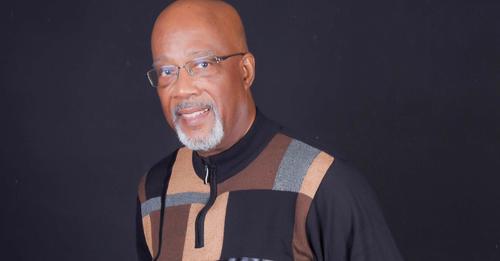
I Really Give a Whitt About This Guy; I’m Hoping That You Will, Too


You need to know up front that this eventually will become a shameless plea for GoFundMe donations, so get your credit and debit cards ready now. Then go to this link: https://gofund.me/c8778f10

Because I don’t know anyone in my circle of beloveds who needs or deserves a blessing more right now than my man Alan Whitt.

Sometimes it feels as if I’ve known Whitt — I don’t recall ever calling him Alan — all my life. I’m certain I’ve known him almost all of my professional life.

He joined the staff of the Grand Rapids Press in West Michigan shortly after I was hired there in the mid-70s, taking my place as the paper’s “cub reporter” and shattering my uniqueness of being the only Black male journalist on the staff. (But I liked being unique!) Then when I moved on up to the Motor City and took my job as rock music critic and eventually TV columnist at the Detroit News, Whitt followed me there, too, pursuing his passion as deputy sports editor. We didn’t see each other as much as we did in GR, working in different departments on separate floors, but it was somehow cool and comforting just knowing we were still in the same building.

Whitt went on to far greater heights, winning Emmys with ESPN’s SportsCenter and launching his own successful travel business, Allure Quest Travel Experience, LLC, specializing in luxury cruises and romantic vacations. (Stroke of genius, if you ask me.) His achievements have come as no surprise to me, since it seems like Whitt has always been following behind me, then trying to one-up me. 

And usually succeeding.

So when he found out he needed an organ transplant, it wasn’t enough for Whitt to just have a kidney transplant, like I did 11 years ago tomorrow, Nov. 18. Oh NO! Not him. He had to have a kidney transplant AND a heart transplant — at the same time!

When I heard the news, memories of all the uncertainty, the fear, the depression and the anger over feeling my body was betraying me immediately came flooding back. Then I imagined doubling down on all those emotions, knowing my heart was circling the drain, too.

“If I hadn’t received a new heart I would have been dead in a year,” Whitt acknowledged during one of our several conversations since suffering his initial heart attack in December 2019. “That’s just the reality. I’ve got a long, long, long, long road to go. Like the rest of my life.”

Whitt says he started having heart problems as far back as 2009, but the betrayal became complete while he was in a movie theater in Nashville, where he lives with his wife Gloria, watching Star Wars: The Rise of Skywalker with his son-in-law, Marcus. “I could feel it coming,” he recalls. “I texted Gloria and she told me to get to the emergency room immediately.

“I got up to walk out behind the seats and I just passed out. My son-in-law had to call 911, and they came and took me to the hospital. The doctors decided I needed a pacemaker and a defibrillator, so they put them in my chest.” 

Alan and Gloria, on his 70th birthday.

The rest of his life, which I pray will be long, happy and healthy, will never be the same. Whitt was hospitalized for a month, followed by three months of isolation and a seemingly endless string of doctor’s appointments. “Until February of this year,” he says, “no one had ever even mentioned the word ‘transplant’ to me.”

Then came the wait and worry to find a matching donor. Whitt has not been told the identity of the deceased person whose organs he received, although he does know both heart and kidney came from the same person. The old reporter in him sussed out that his donor was male, young, possibly an athlete or at least in very good physical shape, and may not have died by natural causes.

But at least the dude’s heart and kidneys survived intact, and in this case that’s all that matters. 

Whitt estimates he has had upwards of 10 surgeries over the past four years in Nashville’s Ascension Saint Thomas Hospital network, which he says helped heal his soul as well as his body. 

“It’s a Christian hospital, which I really love,” he says. “While the doctors and nurse practitioners were working on me, another nurse would be holding my hand and praying, and they don’t mind. I love this hospital. I wouldn’t go anywhere else.”

After his successful transplant double-double, Whitt endured three 45-minute rehab sessions every day for weeks. He had to use a rollator to get around until he could work up enough strength to graduate to his father’s walking stick. He’ll be taking handfuls of new drugs, including a strict regimen of anti-rejection pills twice a day, exactly 12 hours apart, for the rest of his days. And at least for now, he is undergoing a heart biopsy once a month to make sure there are no signs of rejection or abnormalities. 

And if that weren’t enough, Whitt and Gloria have been living like nomads with no permanent address, staying in a hotel for more than two years. Why, you may ask? Because a tree crashed through the roof of their house during a violent storm and destroyed their living areas, leaving it to insurance and contractors to wage war over the repairs. 

You ever heard of the Perils of Pauline? Well, this real-life soap opera could be called the Woes of Whitt

Gloria and Whitt had to remain apart for weeks, as he needed to remain in isolation while she really needed to work in order to keep some income flowing in. His daughter, Alanne, came in from Ohio to help care for him. And, as you probably could guess, as soon as Alanne left his side in isolation she contracted COVID. (She’s fine now.)

Oh…my…gracious.

Whitt can’t possibly work, at least not for the foreseeable future. And with all the expenses connected with his medical care and just everyday living, the couple’s bottom line could use a serious transplant of cash. 

That’s where you come in.

Through it all, Whitt says, “I tell you, man, I know that I’m blessed. I’m feeling stronger every day. This isn’t anything that I did. This is God taking care of me. Because everything had to be perfect. If there was one glitch it could have screwed the whole thing up.”

Alan Whitt is one of the most decent, talented and worthy dudes I’ve ever known. He’s definitely the only Ohio State Buckeye I’ve ever liked. He knows how blessed he is to still be with us; now he needs us to give him a little help.

There is a GoFundMe account established in his name, including updates on his condition. Here again is the link: https://gofund.me/c8778f10

Won’t you please consider giving as much as you can, especially present and former members of the Detroit media and anyone who has worked alongside him over his career?

As always, I would never ask you to do anything I hadn’t already done myself.

Get healthy quick, Whitt. The cruise ships miss you.

Monday, April 12, 2021

It May Not Be the Bee's Knees, But I Hope My Knee Will 'Bees' Better

This is about how my knee feels now. Every day.
I am scheduled to have left knee replacement surgery this Wednesday (April 14, 2021) at Carle Foundation Hospital in Urbana, Illinois. A few random thoughts:

• This will be my first major operation since my kidney transplant at Barnes-Jewish Hospital in St. Louis on November 18, 2011. (Great Googly-Moogly! That was 10 years ago! I just realized that. Suppose I should think about doing some sort of anniversary tribute later this year.) And to tell you the truth, I really don't know how I feel about this week's procedure.

• My surgery initially was scheduled for March 2020, about a week before the world as we knew it flipped upside down and corona became way more than the name of an imported beer. My joint replacement was canceled due to a sudden, urgent need for hospital beds. Then it was aborted a second time in November when the virus spiked again. As a result, I have been in relentless, agonizing leg pain for more than a year, Biofreeze and IcyHot my constant sidekicks.

I have not been a happy cowboy.

As another result, I find myself approaching this week's operation with a feeling of...well, really, no feeling at all. I'm not excited or anxious or nervous or relieved. I was bitter for quite some time over the cancellations and the knowledge that my suffering continued through no fault of my own. But when you've been in pain day after day for months, it sadly becomes part of your normal existence. You learn to live with it. If you can call that living.

(Many deep thanks to Danny McFarlin –– absolutely no relation, unless his family once owned mine –– the physician's assistant who kept me reasonably sane between surgical disappointments with a series of cortisone injections in my knee. He really gave me a leg up.

My Surgeon: 'No-Pain Bane?'
(Too much?))

And while I'm told the pain will be worse after the procedure, at least initially, at this point it's all relative. Besides, fool me twice, shame on everybody. When I'm actually on the gurney with an IV in my arm and being wheeled into the OR, then I'll know it's really going to happen. Until then, I'm keeping my emotions on lockdown.

• The orthopedic surgeon performing my procedure (a total left knee arthroplasty) is one Dr. Robert Bane, who by all accounts is the Dr. Kildare of east central Illinois. I am not exaggerating when I tell you every single person who's asked about my operation has broken into a broad, knowing smile when I answer, "Doctor Bane," followed immediately by, "He's the best."

OH! I misspoke. One woman at my church replied, "I tried to get Dr. Bane, but I couldn't get onto his calendar. (Pause.) He's the best, you know."

Even other doctors praise his holy name, which is rare indeed. Last week my cardiologist broke into a broad smile when Bane's name came up. "You're in good hands," he reassured. Ironically, I have yet to meet him: we conversed briefly via Zoom many months ago, but due to COVID I will not meet the man in person who's going to cut into my flesh until I'm on the table preparing for the anesthesia. I'm in the hands of a near-total stranger. He is, quite literally, the Bane of my existence.

I am absolutely positive I am not the first one to come up with that.

• I know times change over the course of a decade, but I don't remember ever jumping through as many pre-surgical hoops as I have for this procedure. I have had a complete pre-op physical, new X-rays, bone density screening, blood pressure monitoring, a consultation with my cardiologist. Bathe with a special soap the night before and the day of surgery. Sleep on clean sheets. Stop taking vitamins and all supplements. And, of course, the obligatory COVID-19 test. 

Good news: here you can take the COVID test without having to leave your car. Bad news: It entails pulling into a line as long as the ones giving out free food these days and enduring what seems like a drawn-out, confusing and disorganized process. Very good news: The Carle system requires patients to simply run a Q-Tip around both nostrils, rather than jamming a stick past the eye and into the brain. Extremely good news: I tested negative, so we can continue to communicate.

• I suddenly came to realize one reason so many pre-op tests are required is because I'm not as young as my brain keeps telling me I am. I was blown away by the number of contemporaries who responded to my Facebook announcement of impending knee replacement with comments like, "Had mine done years ago," "Had both of mine done" or "You won't regret it." One friend even sent me a book of healing techniques after surgeries! Good Lord – my friends are getting so OLD! So thankful I'm retaining my youth.

My knee, without a scar. For posterity.
• I am also required to watch a video on knee replacement surgery provided by the hospital. Now, I expected a slick, well-produced instructional piece; after all, Carle owns about half the property around these parts and as a foundation pays no taxes. Instead I got a droning, hour-plus YouTube lecture apparently pulled directly from a long-ago seminar. What a disappointment! I have drifted off every time I've tried to watch it. The clock is ticking. 

• I was grateful that my pastor, Herb Coates, specifically mentioned me and my upcoming surgery during his congregational prayer last Sunday. Prayers are always welcomed. However, since I was manning the Welcome Desk next to the front door after the service, I was an easy target for every parishioner who wanted to inquire about the operation –– which seemed like every parishioner. I swear, I think some of them seemed to care more about my surgery than I do. Is that a good thing?

• I am also so, so grateful for the advancements in medical science. Knee replacements are commonplace now but practically unheard of in America until the 1970s. I think of my Aunt Carrie in Palmetto, Ga., God rest her soul, who made her living by cleaning the local movie theater. In those days you were lucky to have any job, so she worked on her hands and knees, picking up candy and all manner of filth brooms couldn't reach, well into her 80s. What unbearable pain she, and so many other laborers, must have endured! 

I'll think of you Wednesday, Auntie. Just before the lights go out.

Thursday, November 5, 2020

Can Kidneys Create Comedy? I'm Trying to 'B Positive'

 Hey, this is a joke, right?

Annaleigh Ashford and Thomas Middleditch (CBS)
I know CBS, comedy superproducer Chuck Lorre – and I – sure hope so. Many jokes, in fact.

My ears did a double-take when I first heard it: among the shining lights of the network's COVID-compromised 2020 fall TV season, the first new sitcom to arrive in the vaunted CBS prime-time lineup, is a show about kidney failure and organ donation.

Sounds like a laugh riot, huh?

B Positive, starring Thomas Middleditch and Annaleigh Ashford, premieres at 8:30/7:30 Central Thursday, Nov. 5, comfortably nestled between two of Lorre's greatest hits, the return of Young Sheldon at 8 and the eighth-season return of Mom – sans Anna Faris – at 9. Sort of a Lorre Lane, if you will. Few comedies could have a more secure launch pad.

As a kidney donor recipient myself (nine years and going strong, thanks), advocate for organ donation and former renal patient representative for the State of Illinois, I was eager, if a bit apprehensive, to see B Positive. I tracked down the CBS media representative for the series in Los Angeles – I'm the former TV critic for The Detroit News and Detroit Metro Times, among other publications – and asked to review the pilot episode. It isn't available, I was told three times, and who do you write for again?

However, as I go online now and see the pilot reviewed by heavy hitters like The Washington Post and The Wall Street Journal, I see the show was available...just not for me. But I am undaunted! I guess what CBS and most other networks may not realize is, in their fervor to promote new shows by offering online "sneak peeks" and promotional clips, you can nearly watch an entire pilot episode in bits and pieces. 

Which I did. So there, CBS media lady.

Now, B Positive has some, well, positives going for it. Lorre is the sitcom Midas of his era, and anybody who can mine years of laughter out of fat people in love (Mike & Molly), alcoholics in recovery (Mom) and a pack of insufferable genius nerds (The Big Bang Theory) has to be given benefit of the doubt with this delicate subject matter. 

Marco Pennette, the creator and executive producer, Lorre's creative teammate and writer of the first episode, received a successful kidney transplant himself in 2013 so he's got first-hand memories. And Middleditch, fresh off six seasons and an Emmy nomination for the HBO series Silicon Valley, was said to be the hottest property in Hollywood this pilot season.

He stars as Drew, a slightly neurotic therapist and recently divorced dad who gets the news no one wants to hear: his kidneys are headed on a permanent vacation and he'll need a transplant, fast. "Start with family," his doctor advises. "They're usually the best match."

"Oh, great," Drew moans. "A Republican kidney."

Instead, he has a chance reunion with Gina, a former high school classmate played by Ashford, a Tony Award winner on Broadway whom you may remember from Showtime's Masters of Sex. Gina is a boozy, flighty, mildly annoying party girl – she remembers Drew as "the one guy I didn't hook up with in high school" – who offers him one of her kidneys almost on a whim. However, she's got to remain clean and sober for at least three months to donate, and that's one portal where the laughs pour in.
Transplant Pals. (by Pamela Littky, Warner Bros.)

Drew and Gina have kind of an oddball but engaging chemistry, not unlike any two characters on Big Bang, and if you pay close attention you will see a lot of old favorites on B Positive. The delightful Sara Rue (Popular, frequent Big Bang guest) is Drew's ex-wife, and look for the immortal Linda Lavin – yes, that Linda Lavin, Alice herself – as one of the seniors on the minibus Gina drives for a living.

Is B Positive funny? I laughed some, especially at a surprisingly broad slapstick scene on Gina's minibus, but laughter is the aural equivalent of beauty: in the ear of the behearer. Here's what I'm concerned about:

How long can they let Drew suffer and deteriorate before his transplant? A full season, or longer? As anyone on dialysis can tell you, the waiting is the hardest part.

Will they let the audience know that organ donation is not a frivolous, spur-of-the-moment decision, but one that should be carefully considered and discussed with family, friends and doctors? Giving up a body part, even for the best of reasons, is serious stuff.

Will they stress that Drew and Gina need to prepare themselves, both physically and emotionally, for the transplant and that it is major surgery?

Will someone let Gina know that some nephrologists (kidney specialists) advise against young women of child-bearing age donating a kidney because it may lead to higher risk of gestational hypertension and preeclampsia?

Maybe I'm overreacting. Perhaps I'm too close to the subject matter and need to let go and trust fellow kidney recipient Pennette will do the right thing. However, to my knowledge this is the first sitcom ever to deal with kidney donation and transplantation, and there may be a reason for that. 

Hey, if the show increases the conversation about organ donation and gets more people considering the option, that can't be bad. In terms of the show itself, however, for now B Positive deserves no more than a B-minus.

Friday, October 27, 2017

Yet ANOTHER Advantage of Kidney Transplants – New Friends!

My budding bud, Wayne: Sox and Tigers fans, united by kidneys!
At this age I'm not accustomed to getting all giddy over the making of a new friend. That's typically the province of grade-school boys at their first Cub Scout meeting. However, I recently forged a new acquaintance, and I've got to tell you: I'm pretty jazzed about it.

Meet Wayne Meyer II (says Jimmy McFarlin III), baseball coach for small-town Le Roy Junior/Senior High School ("Home of the Panthers") about a half-hour drive from where I live. Now, if Wayne was only a baseball coach and former player, that surely would be enough to curry my excitement: as anyone who knows me will attest, I am an absolute geekazoid when it comes to America's (First, Last and Always) Pastime. For my birthday in June, the only present I really asked for – and received, thankfully – was the commemorative bobblehead of Detroit Tigers righthander Michael Fulmer, the 2016 American League Rookie of the Year. 

What does that say about me?

Anyway, I feel pretty confident that Wayne and I will have a lot to talk about going forward, which is important after the getting-to-know-you period has subsided. But here's the kicker: this tall, extremely healthy-looking man is, like me, a kidney transplant recipient!

Small (Wayne's) World, ain't it?

He and I met in the usual way: standing in line for tests at a hospital laboratory office. I was in line behind Wayne, and regardless of what all those signs say about patient privacy and HIPAA regulations, you cannot possibly whisper softly enough at the check-in desk to avoid being overheard by everyone in a small waiting room. 

He answered all the same medical questions I have been asked at that desk at least once a month for the last six years. I was so familiar with them, I knew the basics of Wayne's condition before he ever turned around to face me.

"How long ago was your transplant?" I asked him.

Came to find out he was a "newbie." He underwent successful transplant surgery on Dec. 3, 2016, and, like I did the first year or so, has to come to the hospital every week for blood tests. The transplant team wants to make sure your foreign "tenant" is making itself comfortable in its new home. For Wayne, that means making the 70-mile round trip from Le Roy every seven days. 

I learned that not only do we share the same local nephrologist, the wise and compassionate Dr. Abdel-Moneim Attia, but we had our surgeries at the same hospital, Barnes-Jewish in St. Louis. We were like renal relatives! Kidney cousins! Since our lab schedules were certain to dovetail, I invited him out to coffee at some later date. To my great delight, he accepted.
My favorite birthday gift. Is something wrong with me?

Weeks later, at an Einstein Bagels restaurant in the shadow of the hospital, Wayne and I got better acquainted. It's fascinating to me how many different ways people come to the point of needing a kidney transplant. In his case, he was actually born with only one kidney! 

Wayne said he was never made aware of it – and since he was a young, healthy, athletic fellow, who would think to look? – until his overworked organ began wearing out. "I had the kidney of a 90-year-old man," he told me.

In 2015, Old Man Kidney decided it had labored long enough. "I started feeling sick," he recalls. "I powered through the end of the school year, and the baseball season, of course, but my feet started to swell. My energy went way down." By the time his wife, Victoria, finally convinced him to go to the hospital, "I was struggling," he admits. "I needed to know what was going on, but I was scared to find out."

Not only did Attia calm and encourage him, but he also made a prediction. "Dr. Attia said from the get-go, 'a year and a half, two years,'" until he received a transplant, Wayne says, "but everything from Barnes-Jewish said it was going to be at least a three- to four-year wait. But Dr. Attia knew what he was doing. He called it from the first time he met me when I was hospitalized."

Wayne spent that year-and-a-half wait on peritoneal dialysis – just like me! – and dialyzed at home with his wife's valiant assistance. "The quality of life did not change much at all," he says. "That's what made the transition so much easier." 

Beyond the steadfast support of Victoria and their two sons, Trey and Colin, the outpouring of concern and care from his tiny town was overwhelming, he says. Clearly, LeRoy adores its high school baseball coach and his family. 

"Some guys at school organized fundraisers to help cover medical expenses," Wayne says. "It seemed like everybody knew about it. I still get people from around town, even other towns, asking me how I'm doing. People who I had no idea knew anything."

And how is he doing? "I feel great," he beams. "Never had a sick day because of it. My energy level is great, though I'm not in shape like I used to be."

None of us are, Coach. Although I'll bet his superior conditioning played a big part in his recovery and present state of health.

His health and happiness come tinged with just a touch of regret, however. Wayne doesn't know who his kidney donor was, but "I do know the kidney was supposed to go to a family member, and for whatever reason it didn't work out," he says. "It's an odd feeling, knowing that it was designated for someone within the donor's family and I ended up getting it. It's kind of a touchy situation. It's one of those cases where you're excited, but you still feel bad." 

Of course, we also talked a lot of baseball. He is a Chicago White Sox fan, but he's such a nice guy that I'm willing to forgive that misguided life decision.

Wayne has invited me to speak to his English class, which will happen in the very near future. I'm so excited! I love talking to young people about the power and passion words can carry, and the remarkable career opportunities I've enjoyed from being able to write good.

Uh, well, I mean. (Just wanted to see if you were paying attention.)

I think the hardest part will be not spending the entire class time talking about our transplants. For both Mr. Meyer and me, it's been an education.

Thursday, December 31, 2015

HAPPY NEW YEAR, CHEYENNE! (Sorry About Missing Your Birthday)

You know that feeling that washes over you when you are shocked and embarrassed at the same moment?

It happened to me last month as the result of a single, four-word midday text from my amazing Bewee (Best Wife Ever), Karen.

"Happy Transplant Day, Darling!" it read.

Holy dialysis, Batman.

November marked the fourth anniversary of the organ transplant that undeniably saved my life, the introduction of a kidney that was described as "near perfect" by the surgeon who performed the operation on my failing body.

It was donated by a six-year-old girl – or more accurately, her parents, after their child suffered a brain aneurysm one horrific day and died on her school playground. Karen and I dubbed the kidney Cheyenne, reminiscent of a Western hero who gallops onto the scene in the darkest hour and saves the day, as a tribute to her and the unbelievable display of benevolence by her parents in the face of devastating grief.

And until I saw Karen's text message, I'd completely forgotten. Cheyenne's tenth birthday, her fourth inside of me, a true modern-day miracle if ever there was, and the anniversary just slipped my mind.

What does that say about me?

This is the photo I posted on Facebook that week to observe #TBT, or Throwback Thursday:

It's one of the last pictures of me with the two most important people in my life. It was taken at the going-away party for my mother, Caribell, and father, the original "Mac" McFarlin, from the retirement home where they lived for several years before moving home to Georgia and, eventually, going home.

Had I been thinking or retained even an ounce of memory, however, this is the personal history photo I should have displayed:

It's one of the first pictures taken of me and the lovely Bewee in the recovery area of Barnes-Jewish Hospital in St. Louis after I emerged from the dense fog of anesthesia with a nearly-new little transplanted kidney. (Did you know that if a child's organ is sewn into an adult body it will increase in size by itself to accommodate the needs of its larger host? Somebody try to tell me there's no God!)

Yet now, four years later and feeling great, with outstanding monthly lab results and an unrestricted diet, I seem to have kicked my kid kidney to the curb emotionally.

Am I ungrateful? Unappreciative? Have I begun taking my unbelievable blessing for granted?

Actually, I think it's just the opposite.

Ever since my 2011 transplant, and the arduous recovery and constant monitoring that followed, I believe my life dialed up to a sharper focus. I was so happy to be off years of daily dialysis, and I heard myself being thankful for what may seem like the smallest things – even going to the bathroom to pee, knowing that there are so many patients on dialysis who cannot.

I remember reading that Jack Benny, the late, great comedian of the '40s-'60s, used to drive his friends crazy extolling the wonders of the most mundane life events. "You know," Benny would enthuse, "that may have been the greatest ham sandwich I have ever tasted. The ham was sliced just right. And the cheese! My goodness!" That's how I felt, and still feel today: everything is a wonder.

The sky is a little bluer, the air just a bit sweeter. And as I weave through the renal community and meet so many people who are desperate for a kidney transplant or faring poorly on dialysis, my blessings leap into focus once again.

Whenever Cheyenne causes me a bit of sharp or prolonged pain – she's only 10, after all, and adopted, so she does become defiant from time to time (fellow transplant survivors, does this happen to you?) – I'm reminded that her stay is not guaranteed, or necessarily permanent. For any reason, or no reason at all, she could decide one day to reject me and just stop working.

So while I may not think about my transplant as much as I did three or four years ago, I do think about it every single day, whether gobbling down my handfuls of pills, monitoring my vital signs or remembering to squeeze in some exercise. However, as in most relationships, it's not enough to just think about how much your beloved means to you. You've got to express it as well.

Hey, I'm really forgetful, and I am sorry.

Happy Belated Birthday, Cheyenne. And Happy New Year, too.

Sunday, March 29, 2015

Chain, Chain, Chain – Chain of Cool

CBS This Morning didn't mention that this is National Kidney Month when they aired this feature on Friday (March 27). But somebody there had to know, right? I mean, could the timing have been any more perfect?

I awakened to the early-morning news show to see this inspiring story of a dozen people in and around San Francisco – all strangers to each other – who helped make medical history at California Pacific Medical Center: They formed the largest "transplant chain" ever on the West Coast, a six-way exchange of kidneys.

For those of you unfamiliar with this still relatively new process, typically a person donates his or her kidney to a stranger who is a blood type and tissue match for the organ. In turn, the recipient has a relative or friend donate a kidney to another stranger in need, and (like the old TV commercial) so on and so on and so on.

There have been such chains assembled on the Left Coast before, of course, but none that ultimately gave life to six renal patients desperately in need of a transplant.

In the CBS This Morning piece, the organ donors and recipients met in person for the first time. Bring your Kleenex.

Zully Broussard, the woman who initiated the donor chain, lost both her husband and a son to cancer. She did not donate her kidney to benefit any particular person. "I just wanted them to have that quality of life," she says. "I want their loved ones to know that they're going to be around."

Oh, heck – why just talk about it? Why don't you watch this report from CBS correspondent Carter Evans for yourself?


Thursday, December 25, 2014

Giving Thanks for (Pre-) Christmas Miracles

The national ESRD (End-Stage Renal Disease) Network Coordinating Center in New York,  for whom I play a very small role as a Patient/Family Engagement committee member, has released a new booklet just in time for Christmas contemplation. It's called Your Life, Your Choice: Stories From Kidney Transplant Patients and Donors.

The introduction says the publication was created "to inspire hope for End-Stage Renal Disease (ESRD) patients, their family members and caregivers...to motivate and empower ESRD patients to explore all treatment modality options, including kidney transplant."

In this time when we gather together to give thanks for our families and celebrate the birth of Jesus Christ, I thought it might be nice to celebrate some rebirths as well. That's what a kidney transplant really is, you know – a rebirth, a rejuvenation, a second chance at life. A second chance to be with your family and give thanks for many more Christmases to come.

Here are just a few real stories from Your Life, Your Choice. (Because reprint rights are so hard to obtain during Christmas week, some names have been changed here. The emotions have been left completely intact.)
*          *          *

"Hello! I'm a three-year kidney transplant recipient and am feeling just wonderful! My name is Carole and I live near Harrisburg, Pa. I had reflux disease at birth culminating in ESRD when I was in my 60s.

"I remember very clearly when I faced the decision of whether to remain on peritoneal home dialysis or receive a kidney transplant. I was on the dialysis machine ten hours every night, seven days a week. It was a difficult time for both my husband and me, but we depended on our faith in God to see us through. I had an awesome personal relationship with Him, so when transplant was needed I was on solid ground with my faith and trusted in the Lord to help us.

"My energy level is way up and I sleep so well at night. It's great to be able to eat whatever I want with very few restrictions. Today I look in the mirror and my skin tone is back to normal. Wow! It just doesn't get any better than that for me.

"I wrote a memoir about my journey through renal failure and dialysis to a kidney transplant. My story is honestly written (through my darkest days) with my personal thoughts and feelings in journal entries, and it's called Transplanted to Better Health. For more information, please check out my website: http://transplantedtobetterhealth.weebly.com/.
*          *          *
"I retired from the Post Office in 2002. My wife and I planned on traveling, and we took cruises and enjoyed our retirement until I started getting sick. We found out I had high blood pressure. No matter we did, in 2008 my kidneys failed and I had to start dialysis.

"Dialysis was getting on my nerves. I was washed out after treatments; some days I could barely make it to my chair when I got home. Being on dialysis for four hours, three times a week took a lot out of life. We stopped our travel plans. 

"A few months after I started dialysis, the staff asked me if I wanted to be listed for a transplant. I was a little concerned about my age – 77 – but I said yes and did everything they asked. My wife didn't think they would give a kidney to someone my age. The people at the transplant center were wonderful, they treated us like family. The first call didn't work out, but two weeks later I had a second call: a young girl had donated her organs and I was given her kidney.

"At age 77, I feel like I've been born again. It's a new life. My wife says I am happier, too. Now we have time to go out to lunch, shopping and all the things I was too washed out to do when I was on dialysis. We are now looking forward to a European cruise.

"I would recommend a kidney transplant to anybody. It's the only doctor's office that I don't mind going to."
                      – Donnie
*          *          *
"Because of Polycystic Kidney Disease, I had been seeing a nephrologist for 17 years when he told me he was retiring due to ill health. He gave me into the care of one of the young doctors in his practice. When this doctor saw my creatinine level of 4.1 (average range for this kidney function indicator: 0.5-1.2), he handed me a list of vascular surgeons and told me to have a fistula put in ASAP – and, goodbye!

"Needless to say, I was stunned by this news. As my father had, in 1966, been Long Island's first dialysis (PD and HD) patient, I knew exactly what I was in for and decided I didn't want it! I decided to get a second opinion. At my first meeting with this new doctor, I knew he was the right nephrologist for me. He told me i was a perfect candidate for a pre-emptive transplant. He proceeded to manage my medications and diet so I could stay healthy enough to remain off dialysis while I searched for a donor.

"Next I signed with a very well known kidney transplant center in New York City. Even though I brought six altruistic donors to the center, they were all summarily disqualified. When the last donor, a girl of 24, was disqualified on the very day I was expecting to receive my surgery date, I knew that I would never have my transplant at that center.

"That same day, via online research, I contacted a transplant center on Long Island. I made an appointment to meet the transplant surgeon and his team. Immediately, everything and everyone felt 'right.' I learned more in that one meeting than I had in over a year at the other center!

"When all the test results were in, combined with those I had at the other transplant center, the team and I discussed my two donors – the last disqualified donor and my sister. We started with my sister, who I brought in to meet the team. She was tested and found to be a good match except for the fact that she was 35 pounds overweight. Instead of disqualifying her on the spot, as the other center had, the dietician and my transplant coordinator worked with her so that she could lose the extra weight.

Thus, on Feb. 23, 2009, my sister and I entered the hospital together and the transplant was done at 7:30 that morning. I remember joyously hopping up on the operating table, in great anticipation of my operation and with complete confidence in my surgeon. The doctor who invented the laparoscopic kidney removal procedure, using his own new technique, performed my sister's surgery. She has only a small scar to mark the occasion of her donation to me. 

"My care in the hospital was superb. The nurses taught me how to change my bandages, what my medications were for. I left the hospital only 48 hours after my transplant, and have not had one problem since!

"How thankful I am for this transplant, for it gave me a new life! Each morning I wake up so happy, to be able to do whatever I want and to have all the energy I need to do it – something I couldn't say for the first 60 years of my life! I can now eat anything I want and travel wherever I please. My brother, also a transplant recipient, and I attend the Transplant Recipients International Organization meetings each month in order to learn all we can to continue to keep our kidneys healthy.

"Every day I feel so blessed to be alive, energetic and happy! Whenever I speak to someone who is either on dialysis or soon to be, I tell them what a difference my transplant has made in my life. 

"Everyone who is in ESRD has a choice to make for the rest of their life. I tell them to "Choose Life" – choose transplant and LIVE!"
           – Mary

Merry Christmas, everyone. Healthy New Year.

Wednesday, December 10, 2014

Give the Gift of a Kidney This Holiday Season

Hey, 'tis the season of giving, right? And what better gift could one give to anybody than a better quality of life?

Or for that matter, life itself?

This could be an appeal to you, Dear Reader, to become an organ donor. But knowing you I'm sure you've done that already.

Instead, you may remember earlier this year I introduced you here to my dear friend Lana Schmidt, one of America's great kidney crusaders and a woman badly in need of a kidney herself. (Look up "Lana Needs Your Love...and a Little Bit of Your Money" from May 25 on this blog.)

In the 12 years since a rare disease called Goodpasture's syndrome robbed her of her kidney function, Lana has been on every form of dialysis known to man. And as anyone who's been through it will tell you, getting dialysis three or more times a week, every week, can exact a tremendous toll on one's body.
Lana Schmidt, on a Kidney Crusade.

Lana is prepared, mentally and emotionally, for the kidney transplant that will dramatically improve her day-to-day living. Physically? That's the catch. She has undergone so many blood transfusions over the years that the antibodies in her system likely will reject any foreign visitor like a healthy new kidney.

The good news: there is a surgeon at the University of Illinois Chicago, Dr. Enrico Benedetti, who is willing to perform Lana's transplant with the aid of a drug called Soliris. The drug, which will block the antibodies and should allow her body to accept the kidney, has been used successfully on highly sensitized transplant candidates in clinical trials. It's estimated that one out of every three dialysis patients are similarly sensitized to transplants and could benefit greatly from this drug.

The bad, really bad, disheartening news: It will cost approximately (deep breath here) $110,000 to administer the series of Soliris treatments Lana needs prior to her transplant, and Medicare won't cover the cost because it and the FDA have approved the drug only to treat rare blood and kidney diseases. Gack.

She has appealed to her congressman and other governmental officials – no help – and pleaded with the maker of Soliris, Alexion Pharmaceuticals, who says its hands are tied. They claim they can't give free patient support with their drug for uses other than those approved by the FDA. It's a kidney Catch-.22.

Now, this is one resourceful lady. It was Lana Schmidt who had the genius moment to reach out to the nursing program at her local college and solicit students to assist her with her home dialysis treatments, giving them hands-on experience while making her daily burden easier. But Lana has run out of bright ideas for this challenge.

Now she feels she has no other option than to raise the money herself, or give up any hope of a lifesaving transplant.

Lana says she needs to set up 501c(3) tax-exempt status to collect the funds, but even that process costs about $400 she doesn't have. (Being sick for a dozen years ain't cheap, folks.) If she can't find the money to file the paperwork herself, she's hoping that an existing nonprofit group – maybe one with pro-kidney leanings – might see fit to take on her short-term cause under its umbrella.

She has even developed a text-message marketing campaign she calls "Tag, You're It!" to help spread the word about organ donation in general and her plight in particular (I told you she was resourceful). She hopes it might catch viral fire in the same way The Ice Bucket Challenge became a worldwide phenomenon earlier this year for ALS.

What she needs now, Lana figures, is to attract the interest of someone like Illinois Secretary of State Jesse White, a longtime advocate and spokesman for organ donation, or an organization such as the National Kidney Foundation of Illinois or Gift of Hope to partner with her in the effort. Whaddaya think? Anybody out there know somebody who knows somebody who might get involved?

Look at it this way: If Lana could get 10,000 people to donate $11 each, she could reach her goal. It's not impossible, or insurmountable. Even raising the 400 bucks to file the 501c(3) would be a great help.

For more information about Lana, or to make a donation, visit her website at www.lanakidneytransplant.com. She's an amazing lady, and she can use our help.


And While We're Thinking About Others: When you hit your knees tonight, I'd like to ask you to ask God to bless two other good people as well.

One is my dear friend Dave, whom I've never met. He's the cousin of one of my former editors, he lives in Idaho and we are brothers through bad kidneys who "met" by this blog.

He's been on in-center dialysis many years, and last week the technicians told him they could not perform his regular treatment: his veins have built up so much scar tissue from frequent injections that they could not gain access.

If you want to terrify someone who needs dialysis three times a week in order to live, that could do it.

Ultimately, a doctor performed an angioplasty on two spots in his shoulder and ordered special balloons that he'll place into Dave's veins in an attempt to open them up. If that fails, they may have to insert a stint. Either way, it's scary business and something no dialysis patient should have to face on top of all his other challenges. Pray for him, please.

Lisa Goich Andreadis.
Also ask for healing for another wonderful (and very funny) friend, Lisa Goich Andreadis. Lisa, whom I got to know well when we were regulars on the same Detroit radio show some years back, is a former standup comedian who also knows well life's serious side: her next book, "14 Days – A Memoir," the poignant story of the last two weeks Lisa spent with her mother prior to her death, is due out next Christmas, 2015.

Some strange malady has been affecting Lisa for well over a month. She's been sick every day. And on her last frantic trip to the ER for assistance – well, let's just say she encountered a level of cruelty and degradation no sick person ever should have to face from a staff of self-proclaimed medical healers.

I won't go into details here – not my place, not my case – but if she ever writes about it I certainly will reprint it here. For now, please just pray she gets well very soon. The world needs a healthy Lisa.

Sunday, May 25, 2014

Lana Needs Your Love...and a Little of Your Money

I wish all of you could know my friend Lana Schmidt. I guarantee you, you would be the better for it.

When her kidneys failed her a dozen years ago, all of the energy from them must have rerouted to her heart, because it is supersized and passionate. Whenever I begin thinking that I'm doing quite a lot to advocate for prevention of kidney disease, the proper care and feeding of dialysis patients and organ donation, I read or hear about something else Lana is up to and put on my humble pants again.

We met years ago on the board of the Indy-based Renal Network, where we both serve on the Learning Action Network for Region 10 (the state of Illinois) as "patient subject matter experts." I'm fairly certain one of us deserves that "expert" tag.


Lana can get a kidney! With your help.
In the 11 years she has been on dialysis thanks to an auto-immune deficiency, Lana has tried basically every form of treatment that exists. She started out, as most patients do, on in-center hemodialysis, then switched to Peritoneal Dialysis (my favored form) for seven years. When her body could no longer tolerate PD, she did her own intensive research and selected home hemodialysis as the best means to keep herself alive. 

Feeling the need to assist others based upon what she encountered, she is the co-leader and driving force of the Kidney Patients Support Group of Quincy, Ill., the "Gem City" of west central Illinois, and its sister city across the Mississippi, Hannibal, Mo. She and her writing partner, Patty Purcell, are regular columnist-contributors to the worldwide medical magazine Nephrology News.

Lana sits on the national board of directors for the American Association of Kidney Patients (AAKP). She has traveled to Capitol Hill to raise awareness of renal disease among key policymakers in Congress. Taking advantage of a state-funded home service program, she has partnered with a local college in her area to have nursing students come to her house and assist in connecting her to her NxStage System One hemodialysis machine, easing the daily setup burden for her while providing invaluable hands-on experience for the students.

A one-woman PR agency, she speaks at conferences around the country and last March during National Kidney Awareness Month managed to land two radio interviews, three newspaper articles – including a front-page feature – and a TV station segment in her town revolving around her fight against renal disease. (You can read the text of the TV story here; you can listen to one of the radio interviews here.) She even gave out kidney awareness information alongside her treats to kids in Quincy last Halloween!

Lana Schmidt is a warm, funny and devoted woman, a true believer. And now she needs our help.

Living a relatively healthy life more than a decade after diagnosis, Lana was a dialysis lifer – or so I assumed. I've met many people in the kidney community who are perfectly content to remain on dialysis with no plans whatsoever to seek a kidney transplant. The devil you know, I suppose. But I was very wrong: She is very excited to have a transplant...but there are complications.

After undergoing more than 20 transfusions over the years, Lana has built up so many antibodies in her blood that the chances of finding a perfect kidney match are practically nil. However, she has a found a surgeon, Dr. Enrico Benedetti, chairman of the department of surgery at the University of Illinois Chicago, who plans to administer a drug called Solaris to block the antibodies at the time of transplant so her body won't automatically reject the organ.

This approach has been used successfully with patients receiving a kidney from a live donor. But Lana will be the first person to try the procedure with a deceased donor kidney. And that's the rub.

Because it's an experimental technique, the hospital wants Lana nearby following the transplant so they can monitor her closely. Since Quincy is 300 miles from Chicago, she will be required to stay at the University of Illinois Guest House in Chicago for at least two months post-surgery, and insurance won't cover her stay. The out-of-pocket costs for her transplant will be at least $3,000, and she needs to raise those funds herself.

"Mostly, I am asking for prayers through this journey and that everything works out," she wrote me. "But if you are able to financially support me by donating to help offset those costs, that would be very much appreciated. 

"Please forward this to others who may be interested in supporting me in this kidney transplant process."

Well, that's exactly what I'm doing, Lana!

Folks, $3,000 is such a relatively small amount to raise, and if everyone reading this gave just ten bucks we could cover her expenses in no time.

Believe me, it's money well spent. I know as well as anybody how dramatically one's life can change with a successful kidney transplant. And if anyone can pay that blessing forward to benefit others, it's Lana Schmidt. 

If you're willing to help, click here to make a donation through PayPal. (Just substitute your email address for mine.) Or, send your checks directly to:


Lana Schmidt
1636 N703rd Lane
Liberty, IL, 62347

Then, immediately after you donate, please feel very good about yourself. 

And thanks.

Friday, July 26, 2013

Walking in the Motor City, Hoping for a Lift – Come Join Me Saturday!

The facts are these: African Americans, who seem to fall victim to every illness from diabetes to high blood pressure at a far greater rate than the rest of the population, make up the majority of people on waiting lists for organ transplants.

However, although black folks need more organs, we donate fewer after we die. A lot fewer. And nearly every medical study you'll see says an organ from a donor of the same racial or ethnic group has a much better chance of being transplanted successfully and overcoming rejection.

C'mon, brothers and sisters, step up! Do you really want some middle-aged white woman's kidney rumbling around inside you?

(Whaddaya think? "White woman" reference too much? Over the top?)

I'm in Detroit this weekend, making an 800-mile round trip from my current home to my favorite city because this is an issue I care about passionately. I was so blessed: I received my donor kidney from a young African American girl, and some doctors say I'm doing better today than I ever did with my own kidneys. She literally saved my life.

You could save some lives, too.

This Saturday, July 27, I'll be speaking – and walking – at the 16th annual LIFE Walk on Belle Isle, sponsored by the Detroit chapter of  MOTTEP (the Minority Organ Tissue Transplant Education Program). The event features a 5K and 10K run in addition to a 5K walk (my mind and heart say "run," but my knees are holding them both hostage in favor of "walk.") The real purpose, however, is to heighten awareness about the critical need for more minorities to consider organ donation.

I hear the goal of Saturday's get-together is to sign up 250 new organ donors. What? I think we can do at least twice  that, even though many of those who will attend the LIFE Walk already may have committed to donation. I say 500 new donors! Hey, why not think big?

I'll be joined by some local TV celebs from Channel 7 (WXYZ), meteorologist Keenan Smith and news anchor Glenda Lewis. And I understand that Glenda's mom, Detroit television legend Diana Lewis, may show up as well. (Can't wait to give her a big hug!) And my old friend (whom I haven't seen in years – some friend I am), former U.S. Attorney Jeffrey Collins, will serve as the official Run Marshal.

If you're anywhere near Metro Detroit, come and join me Saturday if you can. Registration opens at 7:30 a.m., the run begins at 8:30 and the walk commences at 9. My goal: To touch your heart and conscience, bring a tear to your eye and make you knock other people over in your rush to sign up as an organ donor.

I promise you three things: It won't hurt when they harvest your organs for donation. You could help eight people or more live fuller, happier lives as your legacy.

And no matter where you end up going, you won't need your body after you leave.

Tuesday, July 2, 2013

EVERYTHING You Wanted to Know About Transplants – But Didn't Know You Wanted to Ask

Most people know that the wonderful comedian George Lopez received a kidney transplant in 2005, and got the donor organ from his wife, Ann. But did you know he wanted absolutely no part of becoming what he calls "the poster boy for kidney disease?"

George Lopez (Gavin Bond/TBS)
"I just wanted to get in, get out and get on with my life," Lopez admits. "But...I decided that I could not turn my back on the message of organ donation, of prevention, and of taking an interest in your health and the health of your family."

What changed his mind? I found out – and you can, too – in the weekend edition of USA Today last week, which featured a Media Planet section entirely devoted to issues surrounding organ transplantation in America.

Beyond what's billed as Lopez's first-ever interview about his transplant, there are stories on:

• How medical and technological advancements are helping to lessen the time spent on the waiting list for a replacement organ;

• A discussion on the future of transplantation with three celebrated medical experts;

• An article on the financial burdens and realities following an organ transplant;

• A first-person feature on snowboarder Chris Klug, who continued to excel at his sport despite a liver transplant, and much more.

It's a truly impressive – and unexpected – collection of stories regarding one of the topics nearest to my heart. (Or more accurately, my kidney.)

Among the things I think I already knew but are always worth repeating are:

• More than 118,000 Americans are waiting for an organ transplant right now;

• Many of them will wait five years or more for the opportunity to receive a replacement organ;

• Thousands of them will die every year as the gap between the need for organs and the number of organs available continues to widen.

And something I didn't know: 40 percent of all transplanted lungs are rejected.

Yow.

This section from Media Planet, an independent content provider, is really worth diving into if you want to know more about the present and future of transplantation. I'm so glad "Sidney Kidney" turned me on to it. (If you don't know, I can't help you.)

You can read the section HERE.

Thursday, April 25, 2013

Funny, You Don't Look (Barnes) Jewish

I have a deep, abiding affection for Barnes-Jewish Hospital in St. Louis. I imagine I always will. It's hard for me not to think of that sprawling medical complex in the shadow of the Gateway Arch as the place that saved my life.

B-J was, and still is, my kidney transplant center. My wife and I chose it over hospitals in Chicago and other cities for many reasons: its sterling reputation and record for successful transplants primarily, but also because we figured it would be easier and cheaper to get in and out of St. Louis for our many medical appointments and eventual surgery. And, although this is impossible to quantify, we thought the people in the St.L might be nicer and more accommodating as well.

Dr. Jason Wellen, right, and Happy Patient
Like I said, we can't tell if that's true for certain. But after our experience there, we suspect it might be. Surely Dr. Jason Wellen, the Barnes-Jewish surgeon who performed my operation,
is the kind of standup guy you'd love to have a beer with – if, of course, you could drink beer right after having a transplant.

So when Barnes-Jewish senior media relations coordinator Anne Bassett and her department asked me if I would contribute a guest blog to the hospital's website in honor of April as National Donate Life Month, what was I going to say? "Hold up, let me think about it?"

I don't know if other transplant recipients are as passionate about increasing the ranks of organ donors as I've become, but by the same token I can't imagine how they couldn't be. A successful transplant is more than even the "gift of life:" it's a life utterly reborn.

And like I say in my post on the Barnes-Jewish website, which I do hope you'll read by clicking here, it's a cause I feel so strongly about – especially for people of color – that I was willing to endure frostbite and the potential loss of body parts earlier this month to sign up potential donors.

My sincere thanks to Anne Bassett and all the extraordinary people at Barnes-Jewish Hospital for the opportunity to invade their online space. They may be residents of the heartland, but they do mighty fine with other organs, too.

Monday, January 14, 2013

Goodbye, My Kidney Cousin

My dear friend Karen Dumas was the first to let me know. She and I had just shared breakfast that Friday morning, lamenting the post-New Year winter doldrums of January and the difficulty of getting your emotions jump-started and your life's goals in proper focus. So she must have known how I'd respond to the news.

She sent a text message that afternoon. Four words were all that was needed.
Gift of Life Organization

"Hugh Grannum has passed."

They hit me like four sledgehammer blows to the chest.

Hugh Parker Grannum, you see, besides being an award-winning, legendary, trailblazing photojournalist at the Detroit Free Press for more than 37 years prior to his retirement in 2007, felt to me like my kindred spirit because we shared an intimate connection:

We both contracted kidney failure at about the same time, and were on waiting lists for a transplant simultaneously, albeit in different states.

Hugh, 72, was at the Free Press long before I started writing for the rival Detroit News, and he remained there long after I left. We weren't exactly what you'd call bosom buddies during those years, but we knew of each other and were cordial whenever our paths would cross. (Bitter competition between the two daily papers in those days often hampered close friendships.)

But oh, how I admired his work! Hugh's photos consistently captured the essence of humanity, grace and quiet strength. As noted in his obituary, which you can read here, he was extremely mindful to shoot his subjects with dignity, especially African Americans, knowing it may be the only time in their lives they were photographed by a professional. I have worked with a number of very fine photographers over my career, but I always wished Hugh could have embellished one of my stories with his singular magic.

Hugh Grannum just radiated cool. The late, fabled Detroit Mayor Coleman Young, who generally despised anybody who even appeared to have a media connection, maintained an open-door policy with Hugh. Nattily dressed, thoroughly professional, devoted to his art, he was every inch a role model, and after his kidneys began heading south our mutual admiration deepened.

Because of the close timing of our end-stage renal diagnoses and the fact we were both creative black men who worked for Detroit newspapers, our illnesses became closely intertwined. We often were mentioned in the same sentence; the great Freep columnist Rochelle Riley wrote about our mutual transplant needs. I recall one "friendraiser" benefit in Detroit that was held on behalf of us both. Mutual friends would keep me aware of his condition, and I'm certain they did the same with Hugh.


He received his transplant first, in 2010. I sent him a congratulatory card and effusive online best wishes. When I got my Cheyenne in November 2011, I received the same in return. We began speaking on the phone semi-regularly, just checking in and offering encouragement. Then last winter, we finally coordinated my travel plans and his hectic post-retirement schedule in order to meet for dinner.

Hugh, his delightful wife Carolyn and I met at Slows, Detroit's hottest barbeque joint, on a snowy, windy night. He was wearing a jaunty winter cap (oh, he could wear some hats) and his stylish little round glasses. We talked and laughed for hours, comparing transplant waiting list stories, hospital tales, surgery sagas and medication inventories. It was a magical, cosmic kind of evening. It's not because he's gone now that I'm saying this, but it was a night I will never forget.

There was a lot more wrong with Hugh than kidney miseries. He was afflicted with leukemia and, like me, still waged a constant battle against hypertension. Yet he seemed so upbeat, so happy, so...healthy that night, so positive in looking forward to his future with Carolyn and his lovely daughter, Blake.

A lot of people say, "I can't believe he's gone," when someone close to them dies, but in this case I mean it. In a very real sense, losing Hugh is like losing a part of my body, a slice of my history. Admittedly, it's a stunning, slap-in-the-face reminder of my own fragility and mortality. Hugh was literally my brother under the skin, and we both had the scars to prove it.

I can't imagine ever forgetting you, my friend. Hugh Grannum and I will be forever joined at the renal artery. Godspeed to you, man, and deepest sympathies to your family and your many, many friends who will remember you long and fondly.

Again, for more about Hugh, here is the obituary from his newspaper home, the Detroit Free Press.